 contacto@dracresp.com



Anamnesis of habits, symptoms and sleep quality.

Services
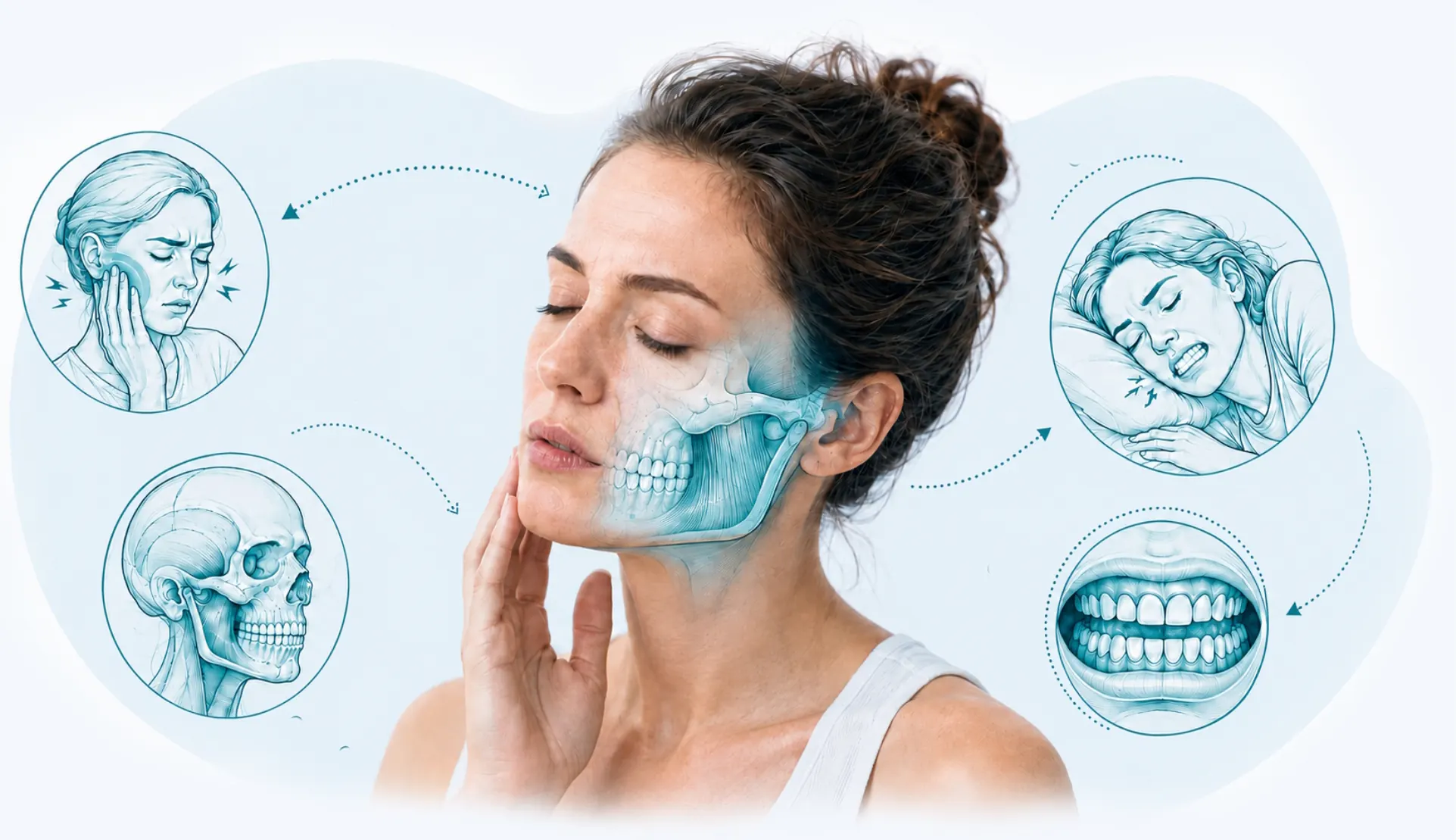
Bruxism is a repetitive activity of the jaw muscles that can occur during sleep or while awake. It is currently considered a motor behavior rather than a disorder, and it is one of the most frequent reasons for consultation in Dr. Nicole Cresp Sinning's practice.
Book an AppointmentIt is a repetitive activity of the jaw muscles characterized by clenching or grinding the teeth and/or bracing or thrusting the jaw. It is currently considered a motor behavior rather than a disorder.
It is masticatory muscle activity that occurs during sleep, which may be rhythmic or non-rhythmic, and it is not a movement disorder or a sleep disorder. It is usually related to other disorders or behaviors such as snoring, sleep apnea, gastroesophageal reflux or the use of stimulating substances before bedtime, among others.
It is masticatory muscle activity during wakefulness, characterized by repetitive or sustained tooth contact and/or by bracing or thrusting of the jaw, and it is not a movement disorder. It is associated with states of stress or alertness and can cause muscle pain secondary to sustained clenching of the chewing muscles.
Sleep bruxism is associated with several sleep-related conditions, such as obstructive sleep apnea (OSA), restless legs syndrome and micro-arousals.
In obstructive sleep apnea, bruxism may act as a protective factor, since jaw muscle activity can help keep the upper airway open and prevent it from collapsing during sleep.
Do I need to wear a splint all night? Consensus statements do not set direct guidelines on continuous nightly splint use. However, they indicate that bruxism only needs to be managed when it has negative consequences (risk factor), provided that such medical or dental management does not compromise any positive or protective effects bruxism may be providing to the patient.
How I work
Anamnesis of habits, symptoms and sleep quality.
Thorough clinical examination.

Complementary studies when required.

Personalized treatment plan, fabrication of mandibular advancement devices and referral to other specialists when deemed appropriate.

In-person or online follow-up appointments.
Frequently Asked Questions
Bruxism is not a disease, but a motor behavior of our body. It consists of repetitive activity of the jaw muscles, whether clenching, grinding or holding tension in the area.
Yes, it is a very common association: they occur together in 30% to 50% of adults with apnea. In these cases, bruxism may act as a protective mechanism of your body; by tensing the jaw, the body tries to reopen the airway after a pause in breathing.
Yes, there is a very strong connection. People with gastroesophageal reflux disease (GERD) are 5 to 6 times more likely to have sleep bruxism than healthy people. The prevalence of sleep bruxism reaches up to 73.7% in people with reflux, compared with 12.8% in the general population.
The evaluation considers your habits, symptoms and sleep quality, together with a thorough clinical examination, and complementary studies are requested when required.
Sleep bruxism occurs while you sleep and is characterized by muscle contraction that may be rhythmic or sustained. Awake bruxism happens while you are awake and shows up as repetitive tooth contact or strong tension or thrusting of the jaw.
It depends on each patient. For example, if you have sleep apnea, a traditional splint could worsen your breathing. For those specific cases, specialists recommend alternatives such as mandibular advancement devices (MADs) or CPAP.
Yes, the initial evaluation can be carried out by video consultation; the physical examination is arranged in person when necessary.
