 contact@dracresp.com



History of your habits, symptoms and quality of sleep.

Services
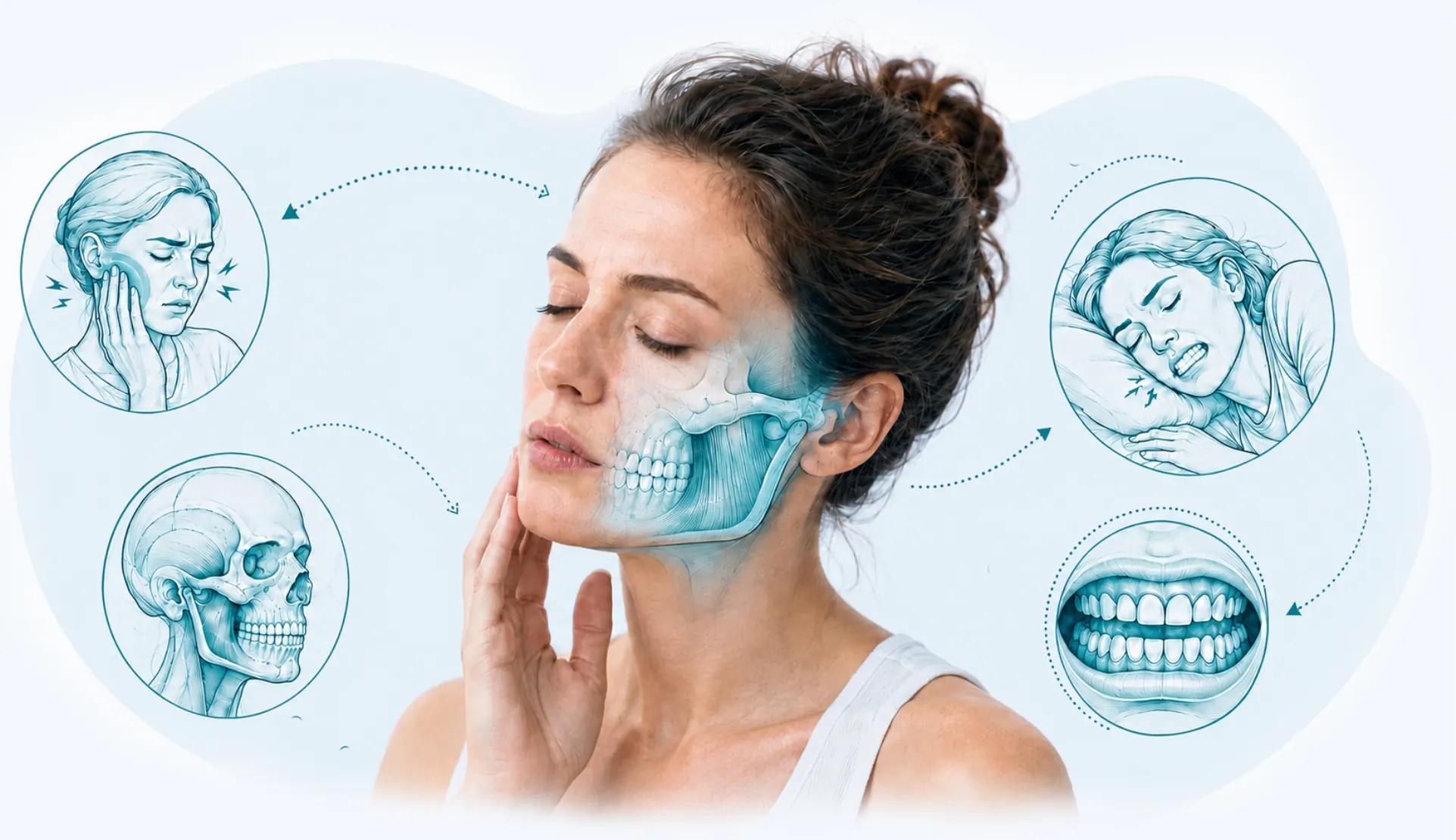
Bruxism - clenching or grinding your teeth, consciously or during sleep - is one of the most frequent reasons for consultation in Dr. Nicole Cresp Sinning's practice. A timely diagnosis makes it possible to prevent tooth wear and associated pain before it turns into a temporomandibular disorder.
Book an AppointmentBruxism is the involuntary activity of clenching or grinding the teeth, outside of the normal functions of chewing or speaking. It can occur during sleep (sleep bruxism) or during the day, often associated with moments of concentration or tension (waking bruxism).
Both variants are evaluated with advanced diagnostic technology, since their origin and management may be different: sleep bruxism is related to the quality of sleep and, sometimes, with sleep apnea, while awake bruxism is usually associated with postural habits or muscle tension during the day.
 Tooth wear or sensitivity
 Pain or fatigue in the jaw muscles, especially when waking up
 Morning headache
 Dental fractures or chips without apparent cause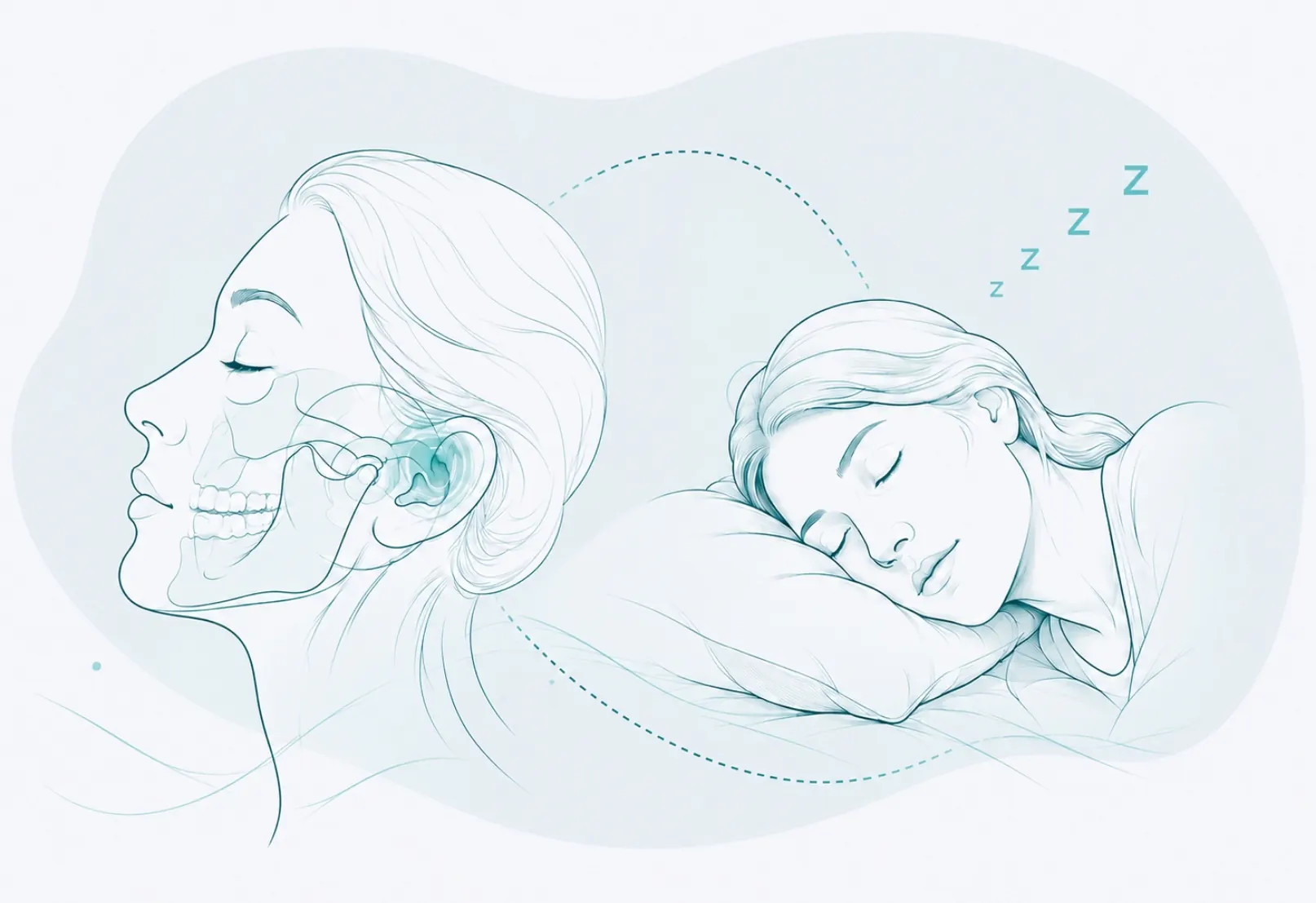
About bruxism
Uncontrolled bruxism is one of the main factors of overload of the temporomandibular joint, and in its sleep variant it can be related to sleep apnea.
For this reason, its evaluation is usually integrated with the TMD study and, when appropriate, with a sleep evaluation.
Book an AppointmentHow I work
History of your habits, symptoms and quality of sleep.

Dental and temporomandibular joint clinical examination.

Complementary studies when required.

Personalized treatment plan: unloading splint, therapy.

In-person or online follow-up appointments.
Frequently Asked Questions
Sleep occurs while you sleep and is related to the quality of your sleep; waking occurs during the day, often associated with moments of tension or concentration.
It depends on your diagnosis; The type of splint and its use are defined in your evaluation.
In some cases yes, that is why it can be evaluated in conjunction with your sleep when appropriate.
It does not always disappear completely, but in most cases it can be controlled and thus prevent tooth wear and associated pain.
Yes, the initial evaluation can be carried out by video consultation. An in-person physical examination is coordinated when necessary.
The evaluation considers your habits, symptoms and quality of sleep, along with a clinical dental and temporomandibular joint examination; Complementary studies are requested when required.
