 contact@dracresp.com



In-depth anamnesis: history of your pain, habits and background.

Services
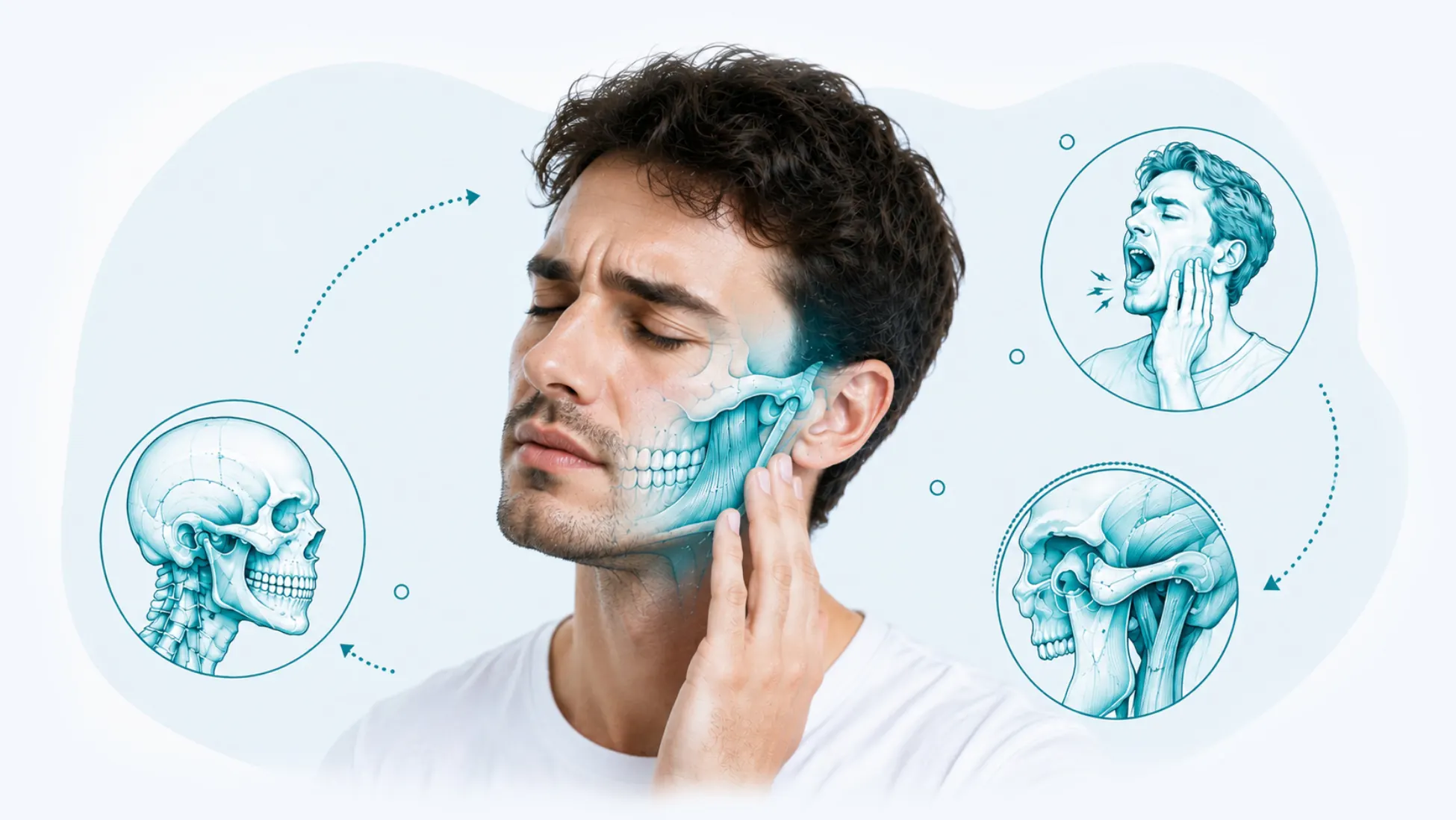
If you experience pain in your jaw, noises when opening or closing your mouth, blocks when chewing, or unexplained headaches, you may have temporomandibular disorder (TMD). Dr. Nicole Cresp Sinning is a certified specialist in TMD and orofacial pain, with postgraduate training at the University of La Frontera.
Book an AppointmentTMD are a group of conditions that affect the temporomandibular joint (the one that connects the jaw to the skull), the chewing muscles, and associated structures. They can cause local or referred pain to the ear, temple, head or neck, in addition to altering the way you open your mouth or chew.
 Pain or tenderness in the jaw, temple, or near the ear
 Noises (clicks or clicking) when opening or closing the mouth
 Blockage or difficulty opening the mouth wide
 Frequent headaches or migraine-like pain
 Pain when chewing or yawning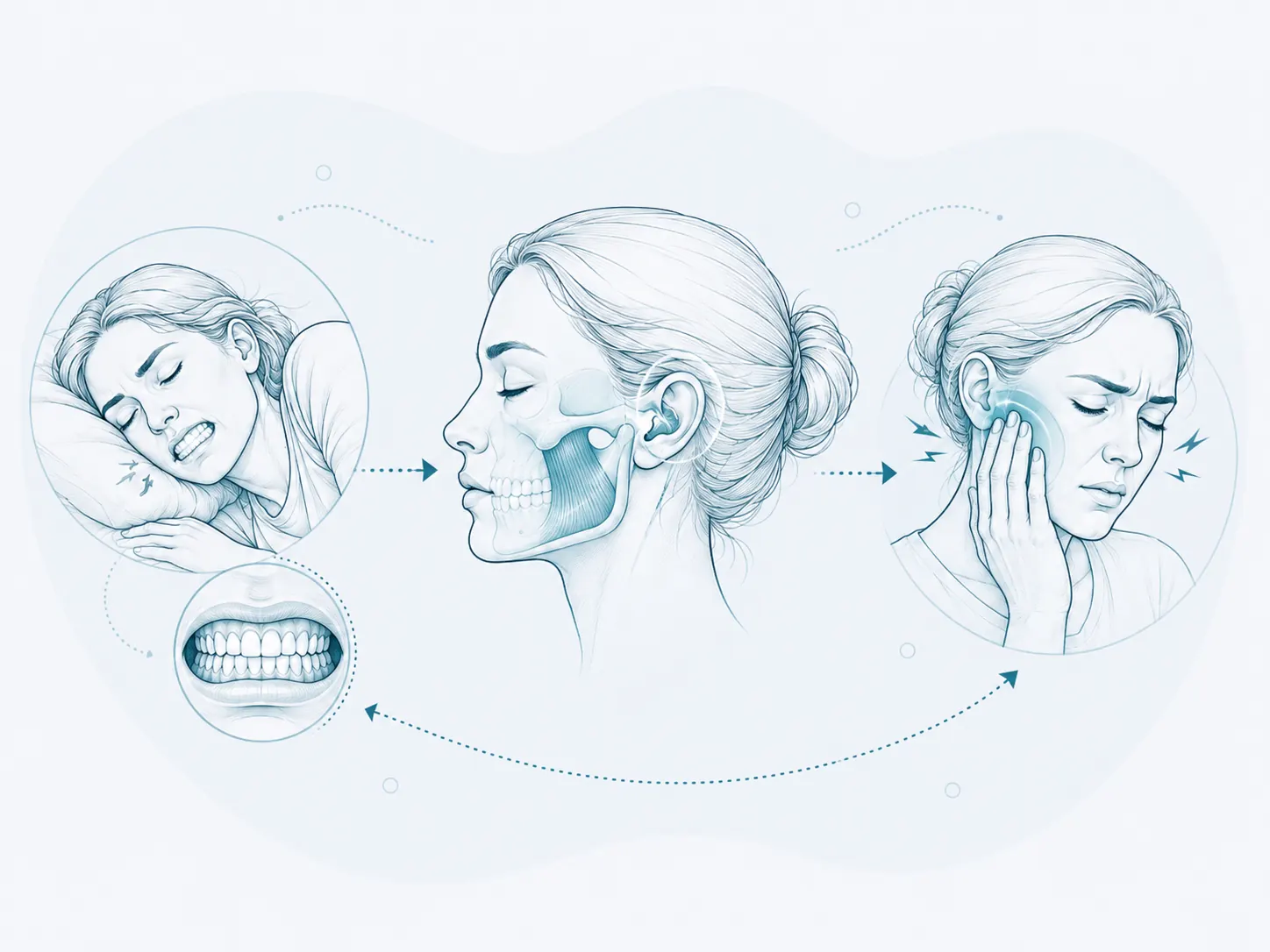
About the TMD
Bruxism - clenching or grinding your teeth, consciously or during sleep - is one of the most common causes of overload on the temporomandibular joint and chewing muscles. A distinction is made between sleep bruxism and waking bruxism, and both are evaluated with advanced diagnostic technology as part of the study of your TMD.
Book an AppointmentHow I work
In-depth anamnesis: history of your pain, habits and background.

Clinical examination of the joint, muscles and bite.

Complementary studies when required.

Personalized treatment plan: unloading splints, myofunctional therapy, pain management.

In-person or online follow-up appointments.
Frequently Asked Questions
In most cases, TMD can be controlled and significantly alleviated with a proper diagnosis and a personalized treatment plan.
Yes. The initial evaluation can be carried out by video consultation; in-person physical examination is arranged when necessary.
Not necessarily. The use of the splint and its duration are defined by your diagnosis and response to treatment.
It depends on the cause and severity of the condition; It is defined in the initial evaluation and is adjusted according to your progress in the controls.
Not always, but it is one of the most frequent risk factors. That is why it is evaluated in conjunction with the rest of your symptoms.
Evaluation includes an in-depth history and clinical examination of the joint, muscles, and bite; Complementary studies are requested when required.
