 +56 9 8442 9825
 contact@dracresp.com



 7 min read
 27 - 08 - 2026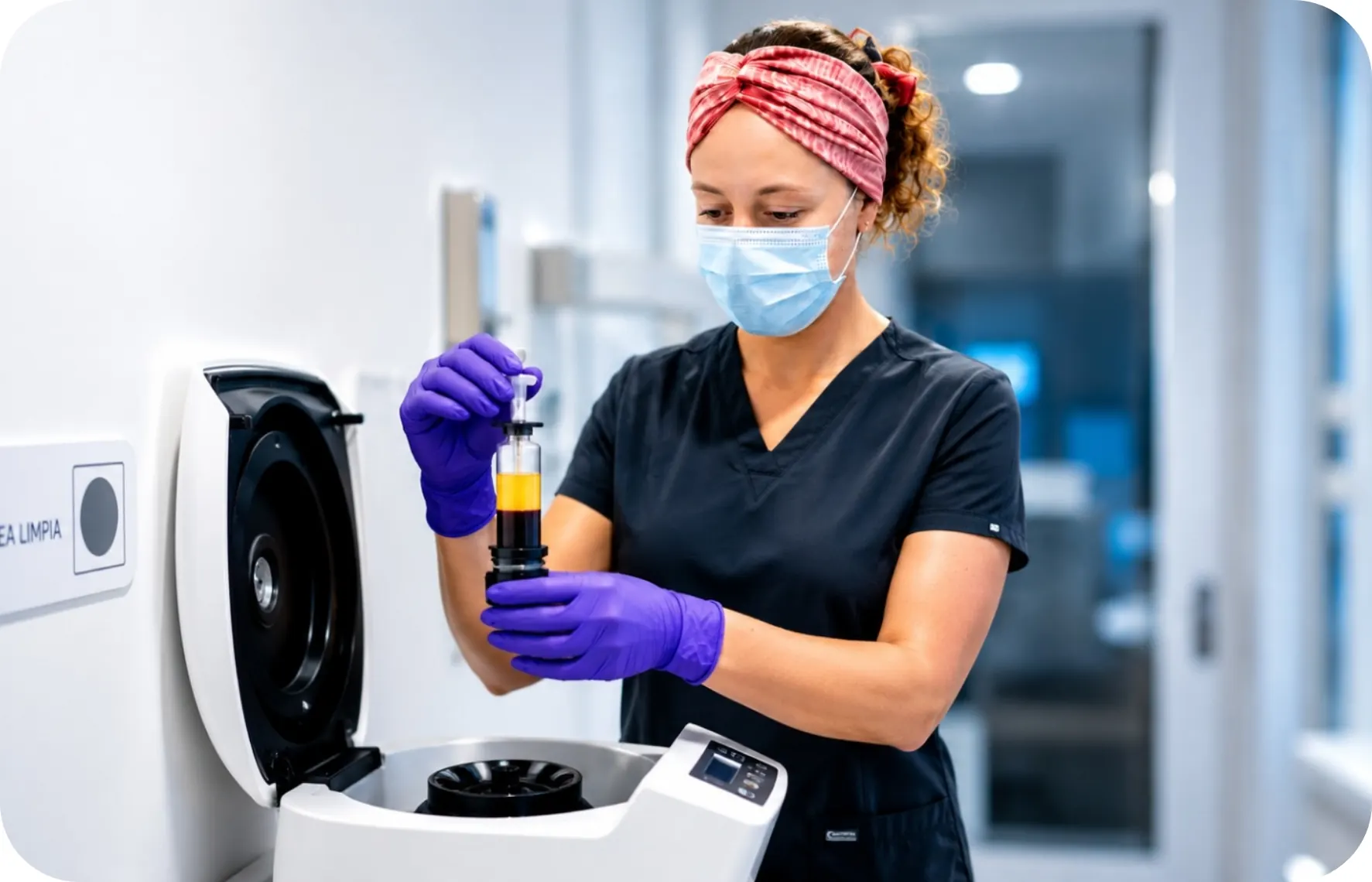
Platelet-rich plasma (PRP) is obtained from the patient's own blood. Through centrifugation, a fraction with platelets and biological mediators that participate in repair processes is concentrated. In the temporomandibular joint it has been studied as a complement in certain painful joint disorders.
What does the available evidence say?
Recent systematic reviews have found reductions in pain and improvements in mouth opening in some studies, especially when PRP or platelet-rich fibrin are used after arthrocentesis. However, the results present significant variability between protocols, patients and comparators.
Another review points out that PRP could be useful, but that studies with higher methodological quality, larger samples and lower risk of bias are still required to know its real value.
It is not a treatment for all TMD
TMD includes muscle and joint problems and associated headaches. An intra-articular infiltration would only make sense when the evaluation identifies a compatible joint condition. It is not indicated simply because of jaw pain or bruxism.
How do you decide if it can be an alternative?
The decision starts with a medical history and a physical examination. Previous treatments, response to conservative measures, medications, coagulation history, and imaging results are reviewed when applicable.
If considered appropriate, the procedure is performed in person and should include controls to measure pain, jaw function and possible adverse effects. It does not automatically replace physical therapy, education, habit management or other components of treatment.
Questions that should be resolved before
- What is the specific joint diagnosis?
- What conservative alternatives have been tried?
- What realistic benefit is expected and over how long?
- What are the discomforts, risks and aftercare?
- How will the response be evaluated?
Do you want to evaluate your symptoms?
Schedule a consultation to review your case and define the next steps.
Book an Evaluation